🚀 International plant shipping is now faster with DHL & FedEx!


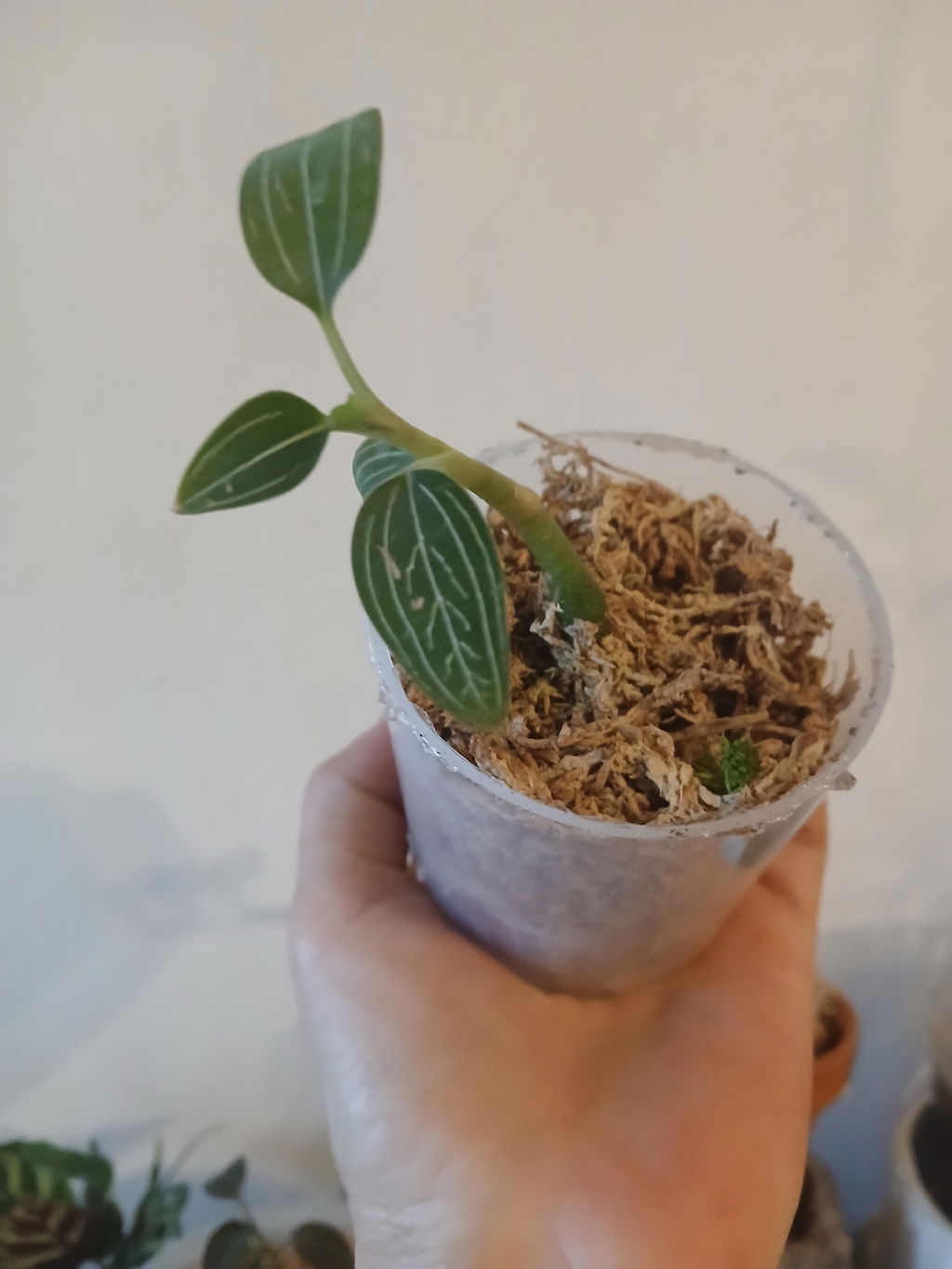
Ludisia discolor var. alba
without flowers - 1.7 inch pot
65,00 lei
Skip to product information


Ludisia discolor var. alba
65,00 lei
Pickup currently not available
Ludisia discolor var. alba is a botanical species.
Ludisia discolor var. alba is a selection of the jewel orchid Ludisia discolor, a terrestrial (sometimes lithophytic) species native from northern India to Southeast Asia, including China and Vietnam, where it grows in humid forests. It is grown mainly for its velvety leaves, not just its flowers. The stems are fleshy, often reddish, and 20-25 cm long; the elliptic-lanceolate leaves have contrasting veins against a dark background. The white flowers, about 2 cm across, appear on 10-40 cm spikes and usually last 2-3 weeks.
The Alba selection has lighter, almost albino-like foliage, but the same growth habit and care requirements as the type.
It needs shade or filtered light, around 8,000-10,000 lux, with no direct sun on the leaves. Typical indoor temperatures are suitable; avoid radiators and cold drafts. It needs moving air: stagnant air combined with wet leaves increases the risk of spots. High humidity helps, but many specimens adapt to moderate humidity if the substrate and ventilation are right.
Water frequently, but let the top layer of the substrate dry out between waterings. Do not leave water in the saucer or decorative cover pot. Starting in autumn, gradually reduce the frequency. During active growth, apply diluted orchid fertilizer after watering. In winter, if growth slows, reduce watering and fertilizing without leaving the plant dry for weeks at a time.
Choose a shallow, wide pot with good drainage. The substrate should be loose and have moderate water retention. Substrate for Ludisia, Vanilla, and Paphiopedilum is suitable. Repot when new roots appear or when the mix breaks down. It is easy to propagate from stem cuttings in moderate warmth and stable humidity.
Leaves are most often damaged by direct sun, water on the leaves in the evening, stagnant air, overwatering, or extreme drying out. It does not need to flower to be a good plant: many people grow it for its foliage; the flowers are a bonus.
You may also like...
Loading product recommendations
C
Este superba! Perfect sănătoasă ! O adevărată bijuterie! De când am primit-o în mușchi a crescut atât ea cât și mușchii s. , ii merge foarte bine atât ei cât și mușchilor. Recomand! Am mai cumpărat ludisii și sint foarte mulțumită Îmi doresc o ludisie var. spiderman și velvet.