🚀 International plant shipping is now faster with DHL & FedEx!


Phalaenopsis tetraspis 'C2' - fragrant flowers
without flowers - 2.5 inch pot
115,00 lei
Skip to product information


Phalaenopsis tetraspis 'C2' - fragrant flowers
115,00 lei
Phalaenopsis tetraspis 'C2' is a botanical species. The flowers are waxy and scented. It is prized for its sequential blooming.
Phalaenopsis tetraspis 'C2' is a selection of the species Phalaenopsis tetraspis, endemic to Sumatra, the Andaman Islands, and the Nicobar Islands, in warm, humid forests from sea level to approximately 100 m. In recent taxonomy, Phalaenopsis speciosa is often treated as a synonym; both names remain in use in commerce. The plant is medium-sized, with leaves up to 30 cm long and 2-5 lateral spikes, arching and often slightly zigzag-shaped. The flowers are waxy, glossy, strongly scented, usually around 4.3 cm, with natural variation in color and pattern.
Blooming is more frequent in spring, but can also occur in other warm seasons.
The 'C2' selection also appears as f. christiana / speciosa in older lists. It often produces many spikes; blooming can be sequential, with flowers opening one at a time.
Requires moderate to bright, filtered light, approximately 18,000-22,000 lux, protected from strong sun and ideally about 12 hours of light per day. Suitable temperatures are around 22-28°C during the day and 18-22°C at night; a difference of 3-4°C between day and night helps flowering. It does not need a severe rest period.
Water when the potting medium dries out, then let the water drain completely. Do not let water collect between the leaves. In a pot, humidity of 55-60% is usually sufficient; mounted, aim for ~70%. During active growth, apply diluted fertilizer (about half the dose) after watering, roughly every third watering, using orchid fertilizer. Use medium-grade, airy bark. A potting medium for Phalaenopsis is suitable if it dries at the right rate for your home. Repot after flowering, when new roots appear.
If the plant produces many spikes but few flowers, check the light and fertilization. Buds that drop often indicate dry air, a sudden change of location, or damaged roots. Soft roots and a sour smell indicate overwatering.
You may also like...
C
Egészséges szép erős tövet kaptam.
Viszont a virágok színe nem ilyen ha nem sötétebb bordós. Aki ilyen élénk pirosat szeretne az ne vegye meg.Nagyon csalódott vagyok.
Gondolom kompenzáció nincs!!!
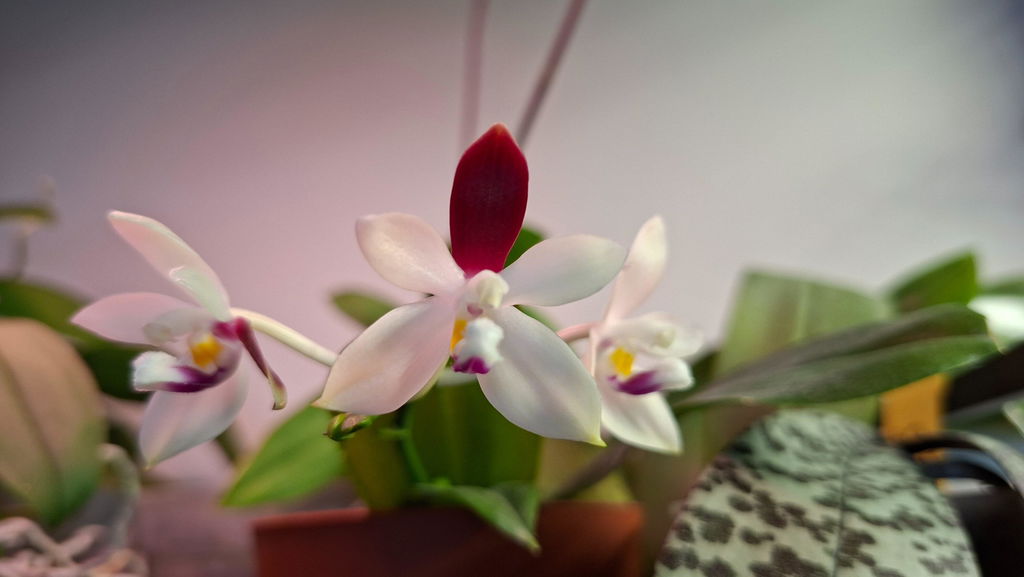
First, you should understand what you are purchasing. This is a plant that makes every flower unique—every spike and every flower will be a surprise. Some may be completely white, some completely red, some spotted, and the intensity of colors will always vary. This is why you can also find multiple pictures even on the product page.
It is a shame that you have left this review without trying to understand the plant that you have purchased.
K
Hyvä kasvi
A
Polecam
A
Top
V
Zeer goed
A
Amazing plant!
P
Soddisfatta